
Rocketry guide 01 / 03
Launch rails
The rail and its matching buttons form one guide system. Check the fit and the usable length together.
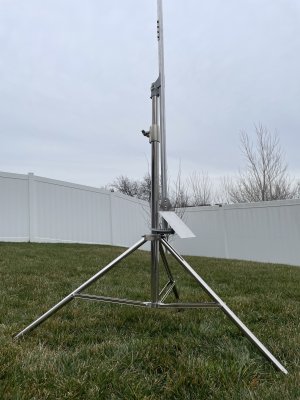
Guide before free flight
A rail keeps the rocket aligned while it builds speed. After the guide no longer supports it, aerodynamic stability must keep it pointing into the airflow.
The guide must be rigid and long enough for the actual rocket and motor. Rail length and usable guidance are not identical: the positions of the buttons affect when guidance ends.
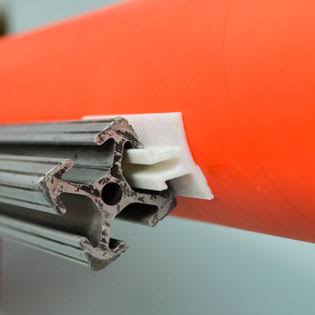
A slot and two matching buttons
Many rails are made from A length of aluminium with the same shaped cross-section along its length. with a slot of constant shape along their length. The button head fits inside the slot while its neck passes through the opening.
Different profiles need different buttons. Confirm dimensions with the launch organiser and dry-fit on the actual equipment.

Look at the connection
Both buttons must be straight, secure and free to slide. They should not clash with fins or leave sharp ends where recovery equipment passes.
What about launch rods?
Some small models use a A straight rod passing through a launch lug on a rocket, used as its initial guide. through a launch lug instead of a slotted rail and buttons. That does not make a rod suitable for every rocket or event.
The launch organiser chooses and approves the equipment. Follow the current code and the competition rules for the actual launch.
Pause and think
Can any button slide safely in any rail?
Reveal the explanation
No. The button profile, slot and fixing must match the real guide.