
Bulkheads & centring rings
A bulkhead closes a tube; a centring ring holds one tube inside another.
What are they?
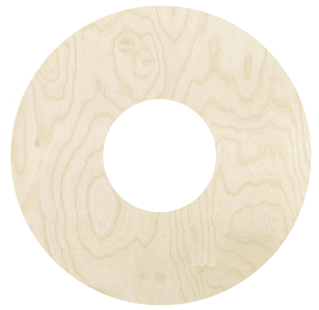
A A solid disc across a tube, used to close a compartment or support a part. is a solid disc across a tube, closing a compartment or supporting an eyebolt. A Rings that support a smaller tube in the middle of a larger tube. has a central opening that holds a smaller tube inside the larger body.

Loads and joints
Bulkheads carry an eyebolt to attach the recovery system to the rocket, often inside a coupler. Use a properly made epoxy joint to hold the recovery forces: deployment can produce some of the highest loads on the rocket. Use good-quality epoxy, prepare the surfaces, mix it correctly and allow a full cure. Support the eyebolt with suitable load-spreading washers.
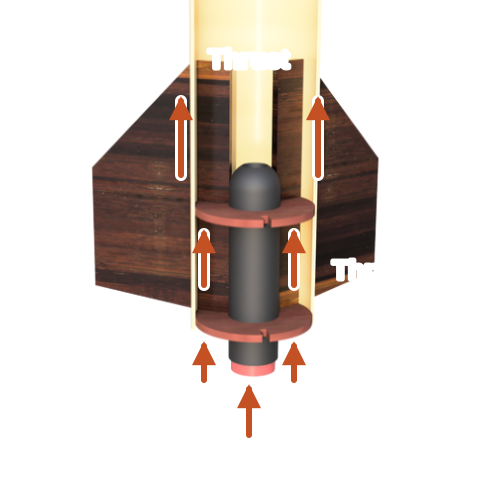
Centring rings transfer the motor’s thrust into the airframe. The rings and their joints must carry that thrust. As the motor burns, it pushes on the motor tube; the centring rings transfer this force into the airframe to accelerate the rocket.
Centring rings and fin tabs often occupy the same space, so include matching cut-outs or slots in the tabs and rings so they To fit parts together using matching tabs, slots or cut-outs that locate and interlock them. into each other. Epoxy everything together well to create a strong motor-mount and fin system.
Common problems
A poor fit leaves weak joints or misalignment. A thin bulkhead may split or pull through at the eyebolt. A solid barrier in the wrong place can also block recovery gas or the deployment path.
Making them
Plywood is the standard choice; at least 3 mm plywood is recommended, with the final thickness chosen for the loads. These simple shapes are easy to laser cut. You can also 3D-print them, using a suitable material, wall thickness and print direction.
Measure the real tubes before cutting or printing, then dry-fit the discs, tubes, fin tabs and motor retainer together. Fit the eyebolt, washers and locking hardware before enclosing a bulkhead. Keep the recovery path clear and allow the epoxy joints to cure fully.
Buying them
Whilst you can buy plywood centring rings and bulkheads, it is often more money than it’s worth for such simple parts. Laser cutting or 3D printing your own can give the same or better quality, with the fit and dimensions tailored to your rocket.
OpenRocket
Follow slide 41: select the parent body tube and add Centering Ring from Inner components. Set the material, thickness, inner and outer diameters, and placement to match the real part. Add the number of rings your design uses. The same process applies to bulkheads: choose Bulkhead and set its material, thickness, outside diameter and position. Include the eyebolt and its hardware in the mass.
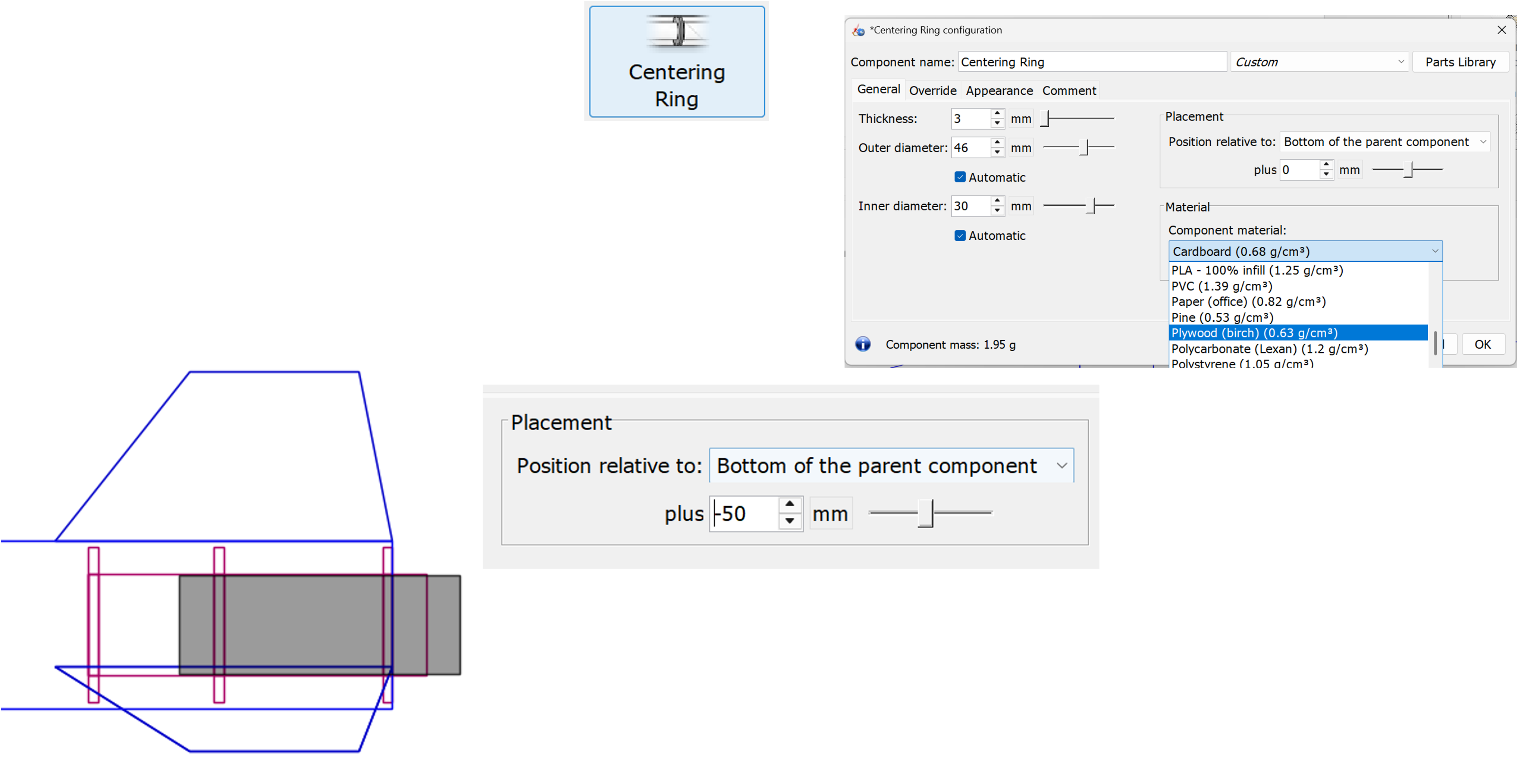
Select the lower body tube, then add Centering Ring from Inner components. Set the thickness and material to match the real part, and use Placement for the ring positions. The pictured dimensions and three-ring arrangement are examples. Use Bulkhead for a solid disc, following the same process with the relevant dimensions.