Eye hook / eyebolt
The recovery eye gives the shock cord a secure attachment to the rocket.
The closed eye
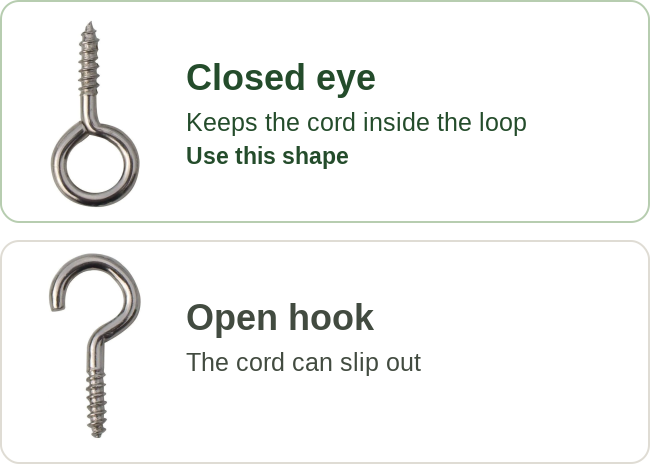
An eyebolt is a metal bolt with a loop at one end. It gives the shock cord a secure attachment that carries the load when the parachute opens.
Use a fully closed eye with a smooth surface. You can tie the cord through it or fit a connector, and the closed loop keeps the cord from slipping out during recovery.
Mounting the eyebolt
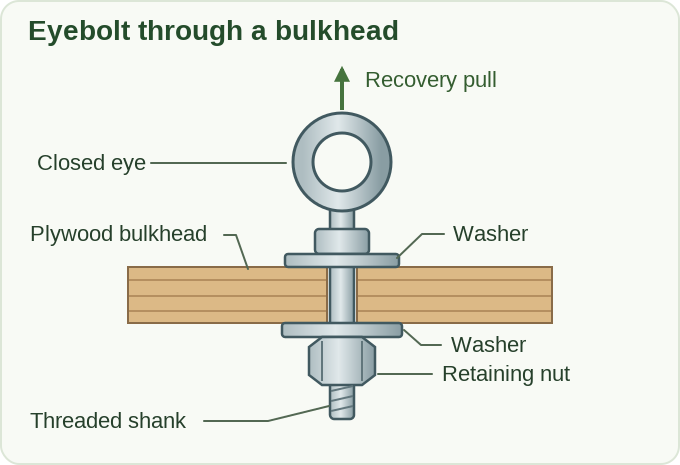
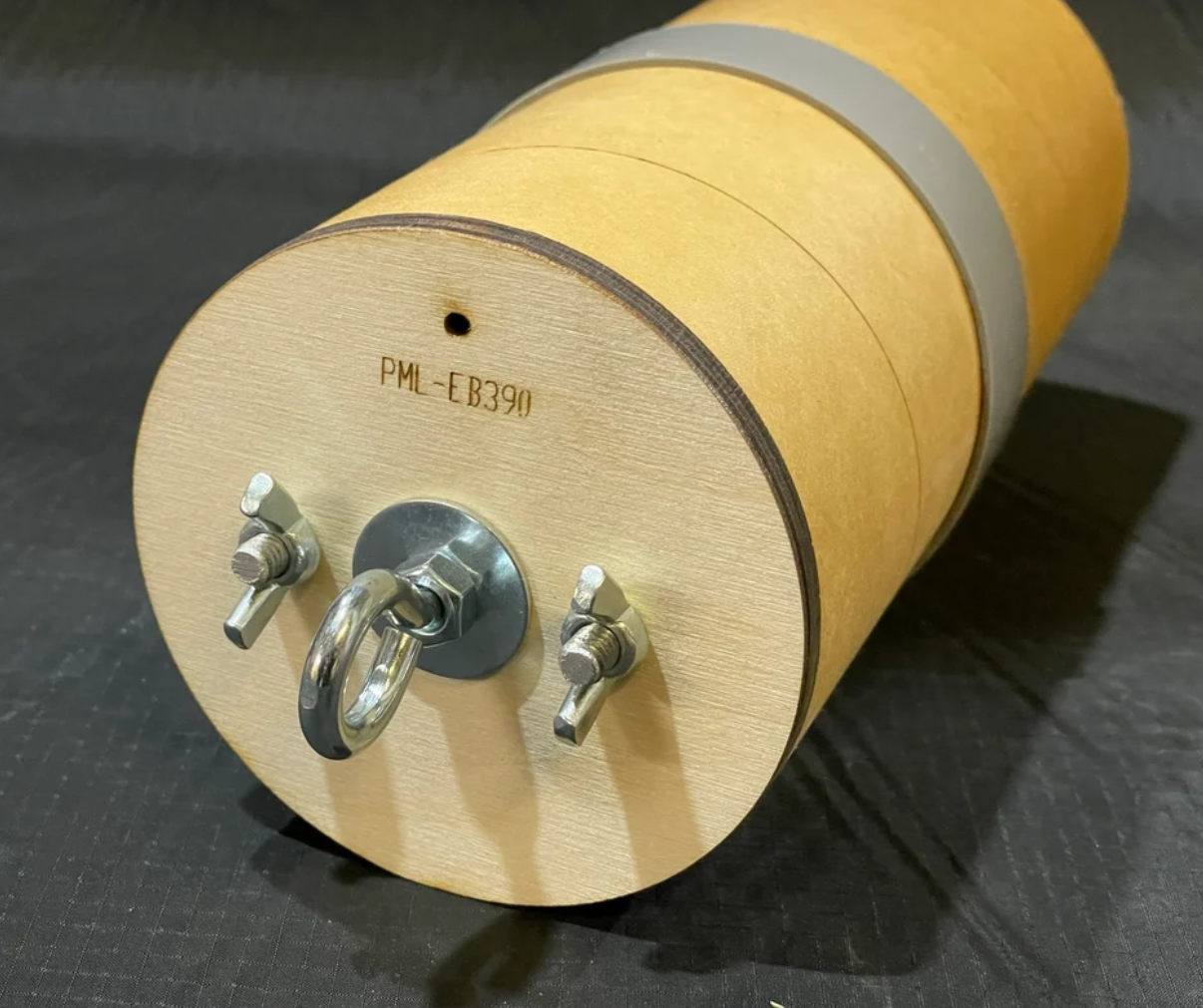
The eyebolt needs a strong base, usually a bulkhead or centring ring. Drill a hole just wider than the threaded shank, pass the bolt through and secure it with a washer and matching nut. The washer spreads the pull over a larger area of plywood.
The centre of a round bulkhead gives the washer room and keeps the pull in line with the rocket. A strong nose-cone base or a solid part of a centring ring can also work. Leave room for the eye, nut and packed recovery gear, and keep the motor-tube opening clear.
Attaching the shock cord
For a small model rocket, you can often tie the free end straight to the eye. A bowline forms a fixed loop and is one option for suitable cord. Follow the kit or cord maker’s knot guidance.
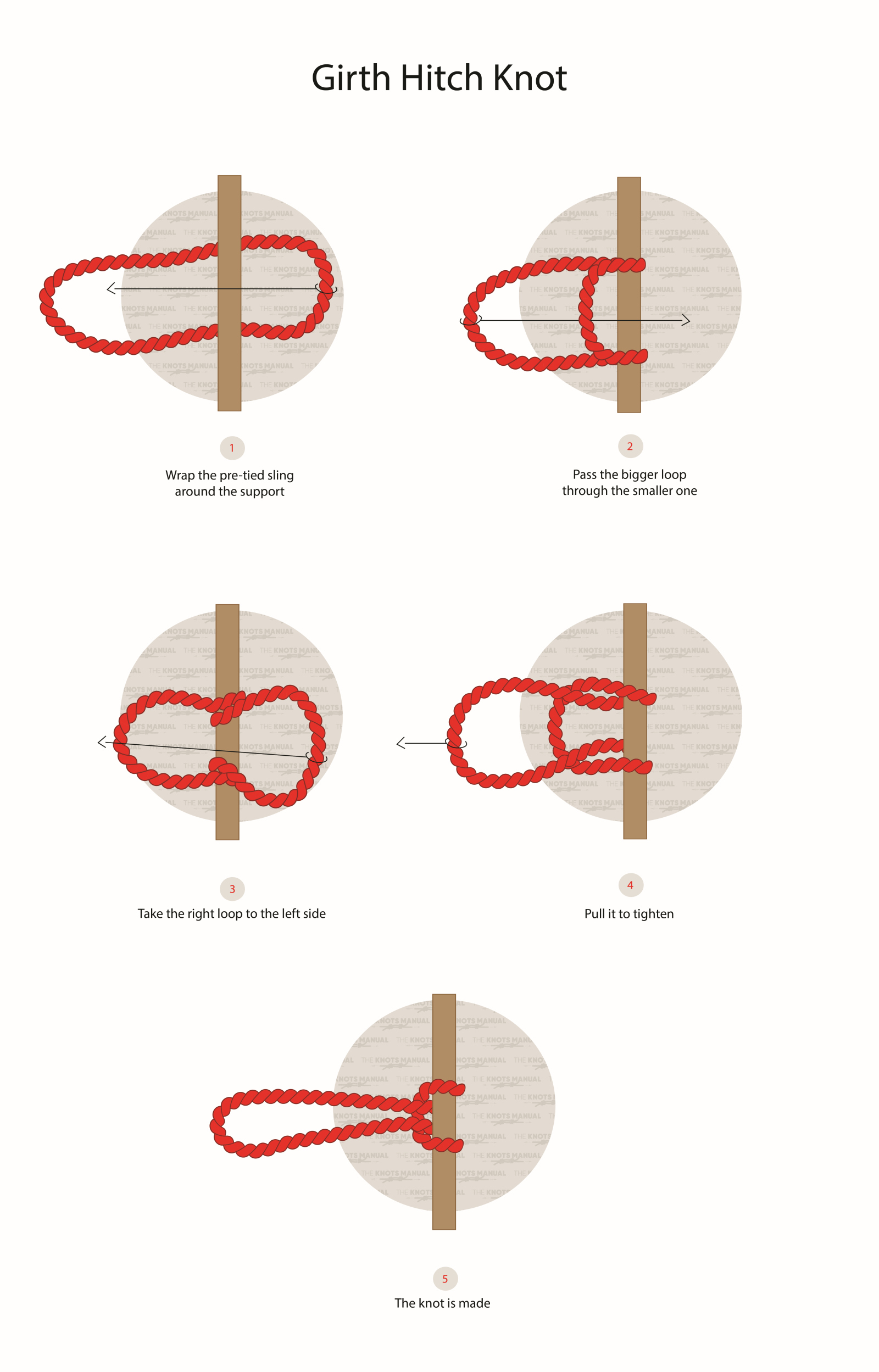
If the cord has a sewn end loop, pass it through the eyebolt, feed the rest of the cord through the loop and pull it snug. This makes a girth hitch. Any fittings already attached to the cord need to fit through the loop too.
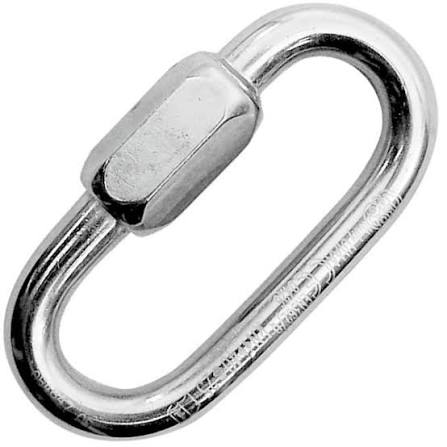
A A removable metal connector with a threaded sleeve that screws shut to form a closed loop. lets you rig the shock cord and parachute as a unit. Slip the link through the eyebolt and screw the sleeve fully shut. You can then remove the recovery gear for repairs or swap it between rockets. For most small models, a direct knot or hitch is enough and saves the weight of extra hardware.
Common problems
A loose nut can release the eyebolt, and a weak bulkhead can split under the pull. If there is enough thread for two nuts, fit a thin jam nut against the washer and a full-height nut outside it. Hold the thin nut with a spanner while you tighten the outer nut against it. This helps resist loosening under vibration.
Making it
Fit and tighten the eyebolt, washer and nuts while you can reach both sides of the bulkhead. Follow the coupler assembly order so the hardware is in place before you enclose the bulkhead or bond it into the coupler.
Buying the hardware
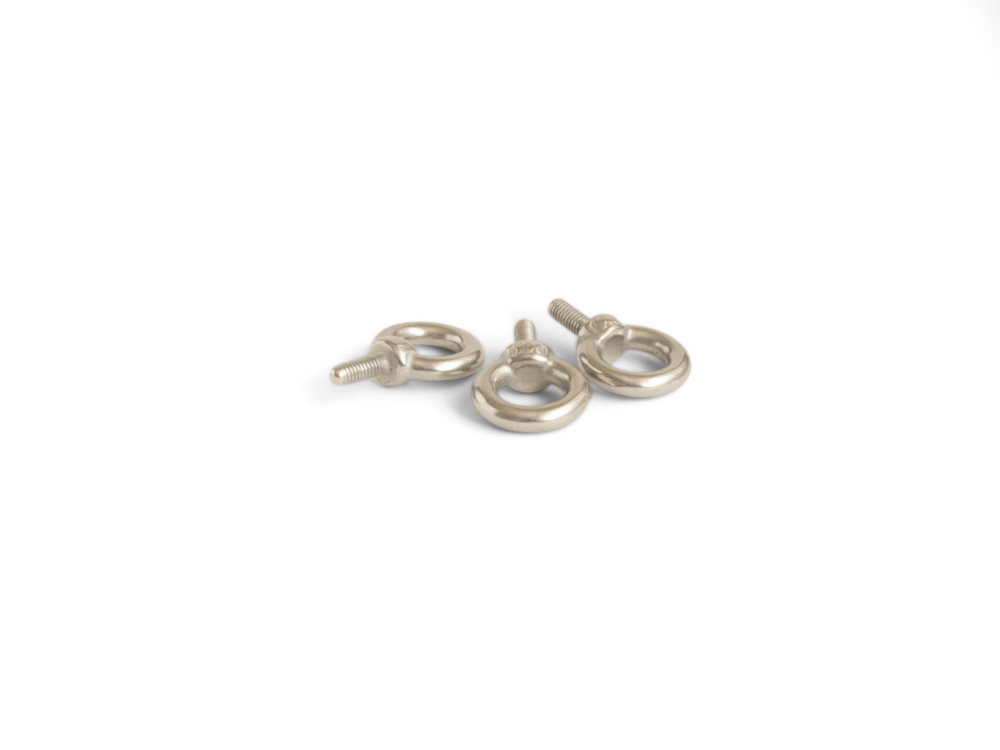
Rocketry suppliers often carry small closed eyebolts that are harder to find elsewhere. Black Cat Rocketry’s closed eyebolts are one example. Hardware shops also sell standard eyebolts, nuts and washers.
Choose a fitting that suits the space and recovery load. Match the nut to the bolt’s thread and the washer to its diameter. An M4 eyebolt takes a matching M4 nut and M4 washer.
OpenRocket
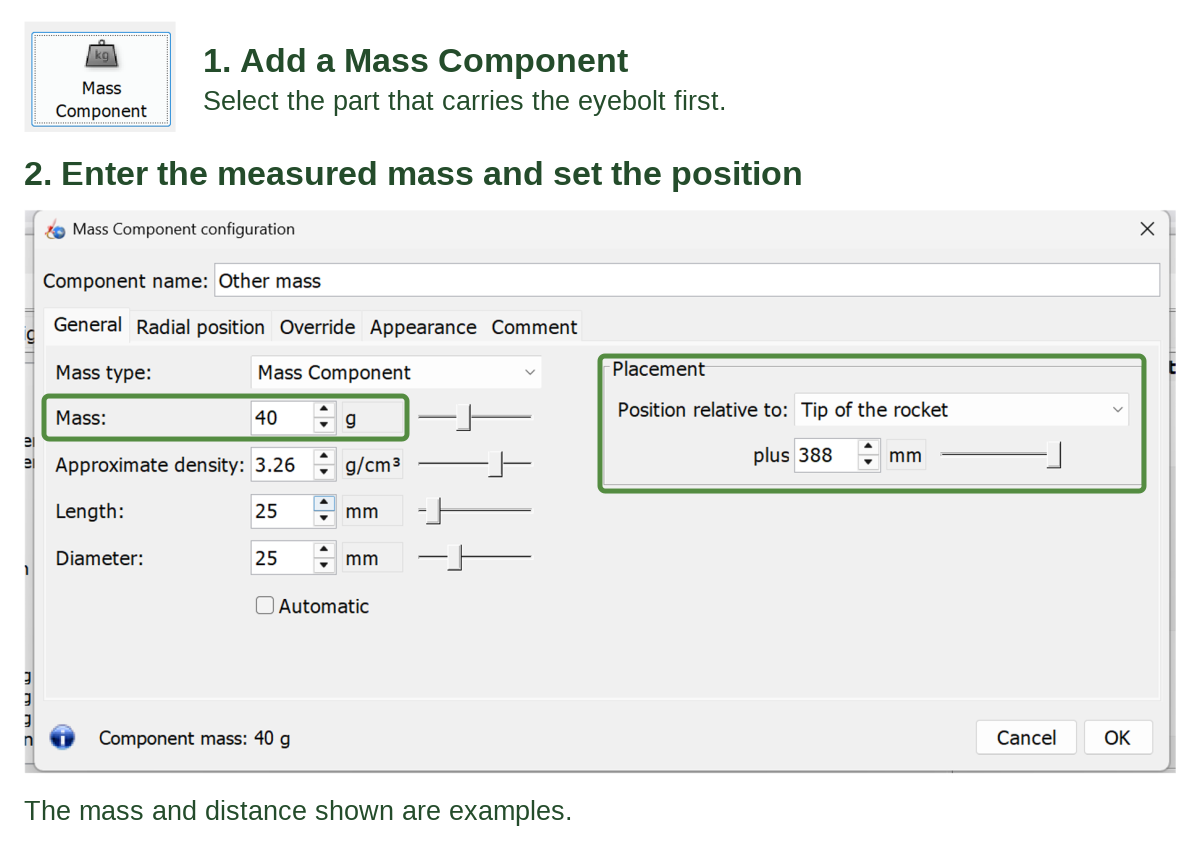
Add a Mass Component at the real attachment position and name it Eyebolt. Weigh the bolt, nuts and washers together and enter that total. Small fittings can add up, so count each one once in the model. OpenRocket component guide.