Flight lesson 04 / 05
Perfect recovery
The rocket must open at the right time, release its parachute and keep all the sections connected for the descent.
The deployment joint
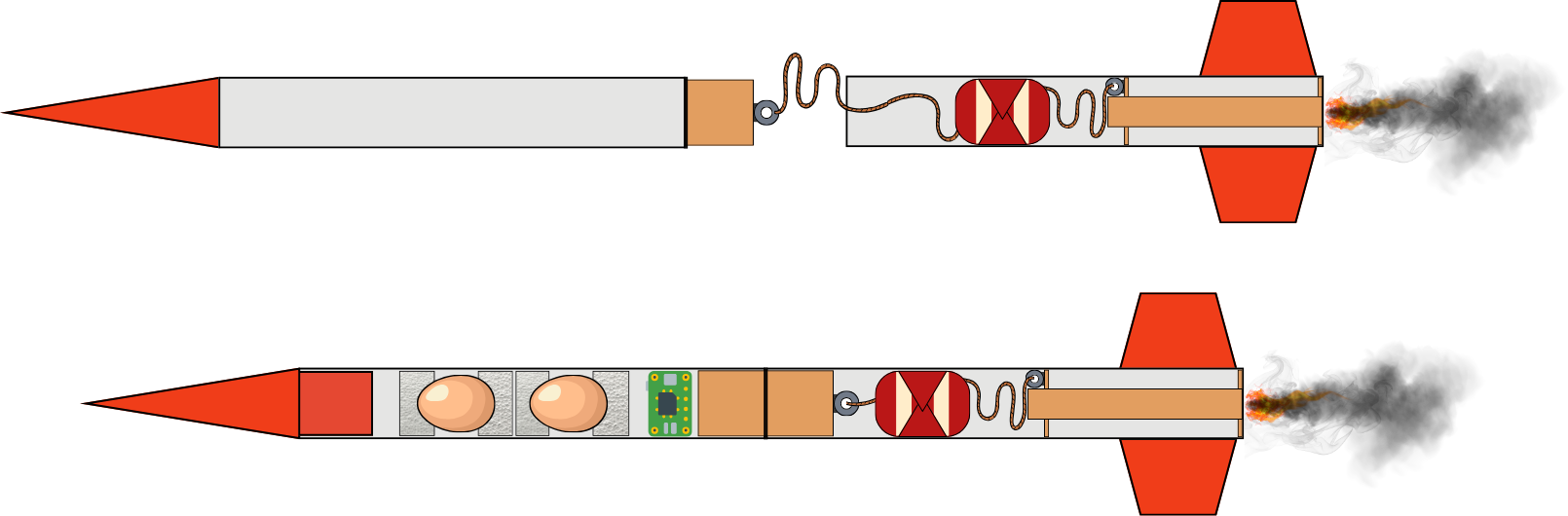
The A canopy and lines used to create drag and slow a falling rocket. is packed inside the body tube during the climb. The rocket usually opens at a joint between two sections. A coupler keeps them lined up while the rocket flies and lets the intended joint separate at deployment.
Check that the joint holds during handling and flight, and that the packed canopy and cord can leave it without snagging.
Motor ejection
In many commercial rocket motors, the The part of some commercial motors that continues burning after thrust ends, before recovery ejection. continues to burn after thrust ends. When the delay finishes, the built-in A built-in section of some commercial motors that produces gas to release recovery equipment. produces gas. The pressure inside the tube opens the joint and pushes the recovery equipment out.
The animation follows the motor burn, coast, separation and parachute opening. The shock cord keeps the sections attached as the canopy takes the load.
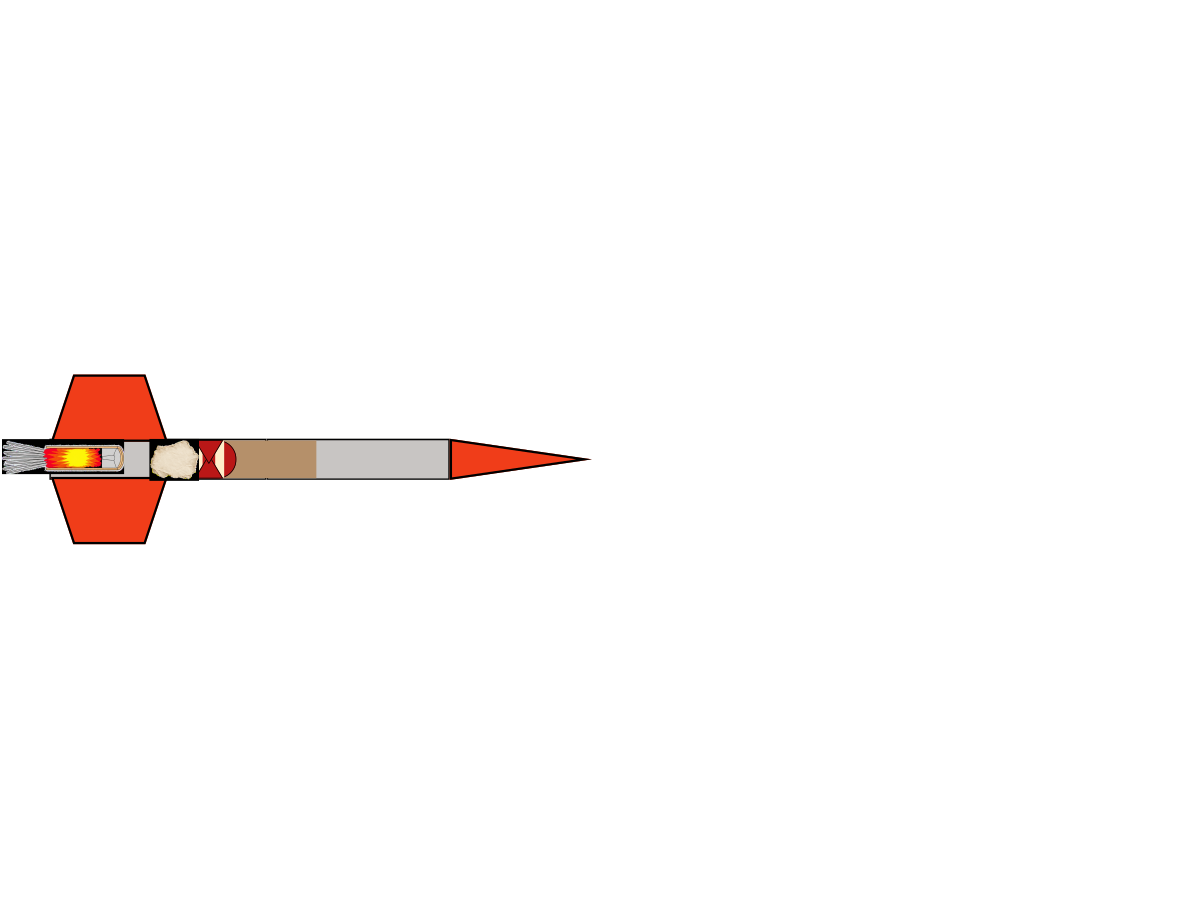
Motor burnThe motor burns while the recovery system is packed inside.
Deployment timing
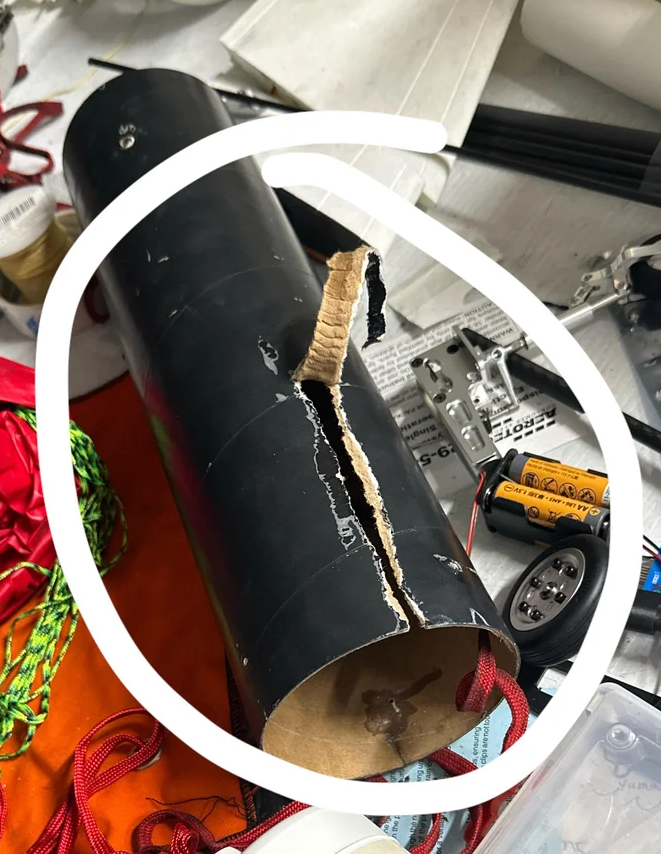
Aim to open the rocket near apogee, when the vertical motion is slow. If the parachute opens while the rocket is still climbing or already falling fast, the sudden pull can tear the canopy, break an attachment or make the cord cut into the body tube. This last kind of damage is called zippering.
The final number in a code such as F20-4 means a nominal four seconds from burnout to ejection. Compare the available motor delays in OpenRocket and look at the speed at deployment.
Shock cord and attachments
The shock cord ties the separated sections and parachute together. Use enough length for the sections to hang apart. The cord and its attachments must take the pull when the rocket opens and the canopy fills.

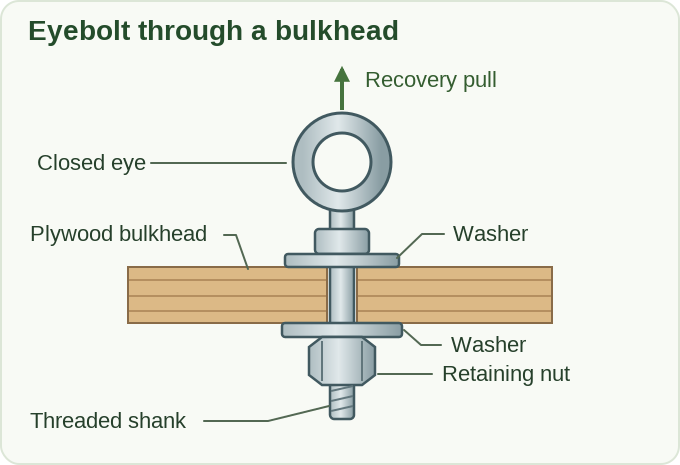
Follow the load from the canopy lines through the cord to its eyebolt or other anchor. An eyebolt often passes through a bulkhead or centring ring, which passes the force to the rocket. Inspect the cord, anchor and supporting part before flying.
Packing and heat protection
Fold the canopy and arrange the lines and cord so they can pull out without tangling. Keep the path clear of anything that could catch a line. Before each flight, check the fabric, connections and that the packed recovery system can leave the tube.
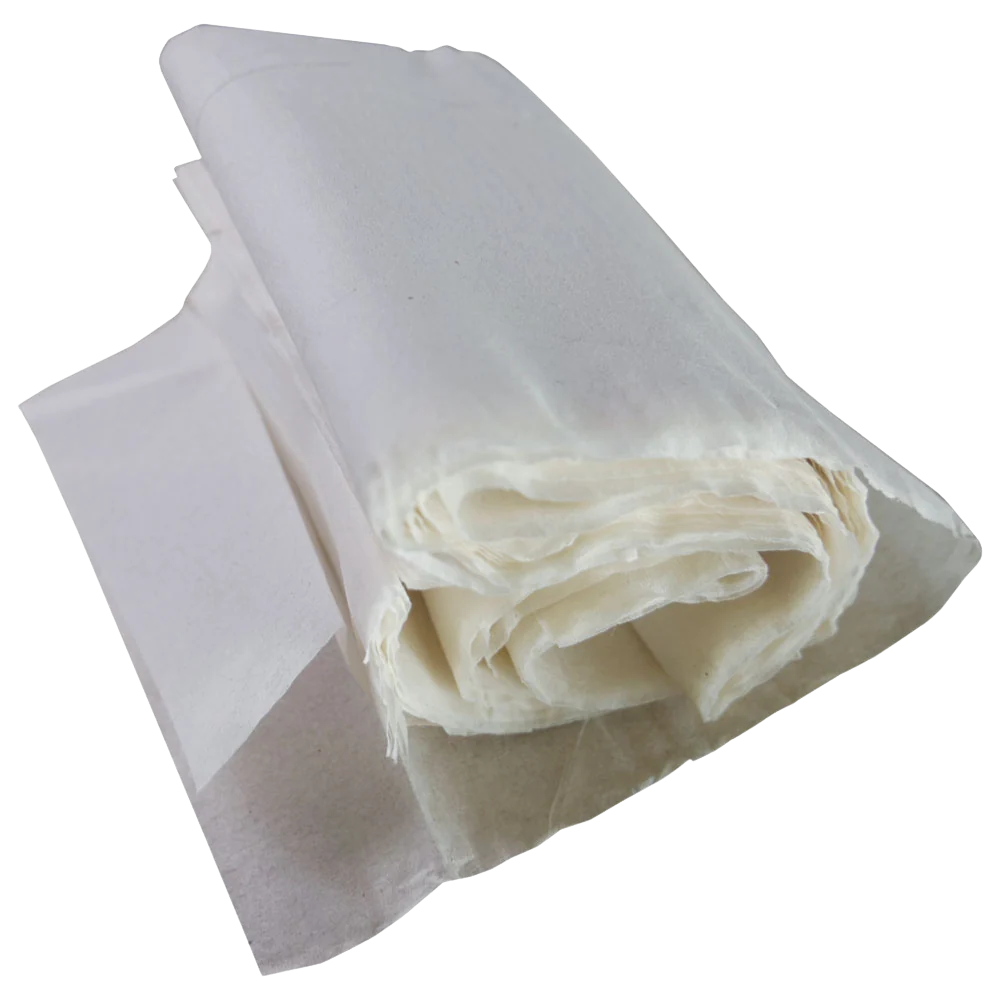
The ejection gas is hot. Put the specified amount of flame resistant recovery wadding or an approved heat barrier between the motor and the packed recovery gear. It should protect the parachute and still let the system move freely.